

A price precision mismatch happens when a master and a follower broker use different decimal, tick, or lot-step formats for the same symbol, so a copied order rounds, gets rejected, or never arrives at all. The fix is runtime translation: reading the follower’s live symbol properties before sending an order, then testing that logic on demo accounts with clear fallback rules for failures.
TL;DR:
- Precision mismatches often occur when broker-specific digit, tick size, and lot step values differ, causing orders to round incorrectly or get rejected during copy.
- Testing on demo accounts should include symbol mapping, lot size rounding, stop-loss and take-profit validation, and reconnection checks to identify common failure modes early.
- Normalizing prices with functions like NormalizeDouble does not validate against broker constraints, making it unreliable for preventing order rejections in copying systems.
- Recalculating symbol properties and scaling order parameters immediately prior to execution enables more accurate and reliable trade copying between mismatched brokers.
- A dependable copier features automatic symbol mapping, live property reads, lot step-aware sizing, relative offset stop translation, detailed logging, and robust reconnection policies.
What causes precision mismatches: digits, point, tick size and symbol naming
Every broker defines its own decimal structure for each symbol, and MetaTrader exposes that structure through specific properties rather than a universal standard. SYMBOL_DIGITS, SYMBOL_POINT, and SYMBOL_TRADE_TICK_SIZE are three separate values: digits controls how many decimal places are displayed, point is the smallest quoted unit, and tick size is the smallest valid price change a broker will accept. A price can display correctly and still fail tick validation if these three values diverge between master and follower.
Symbol naming adds a second failure layer. A master account trading EURUSD might need to match a follower’s EURUSDm, EURUSD.raw, or EURUSD_i, and without a mapping step the copier can appear to be running normally while placing no trades at all.
Contract specifications compound both problems:
- Differing tick value and contract size can make a correctly rounded price still produce the wrong position risk.
- A mismatched point value can make a stop distance that is valid on one broker invalid on another.
- Prefix or suffix differences are often mistaken for a software bug when they are actually a naming mismatch.
How precision mismatch breaks copied orders: rounding, lot steps, and SL/TP rejections
Lot sizing is usually the first place precision mismatch shows up. A follower account with a small balance and a proportional sizing rule can calculate a lot size smaller than the broker’s minimum lot step, and if the copier rounds that down without a floor, the position silently becomes zero.
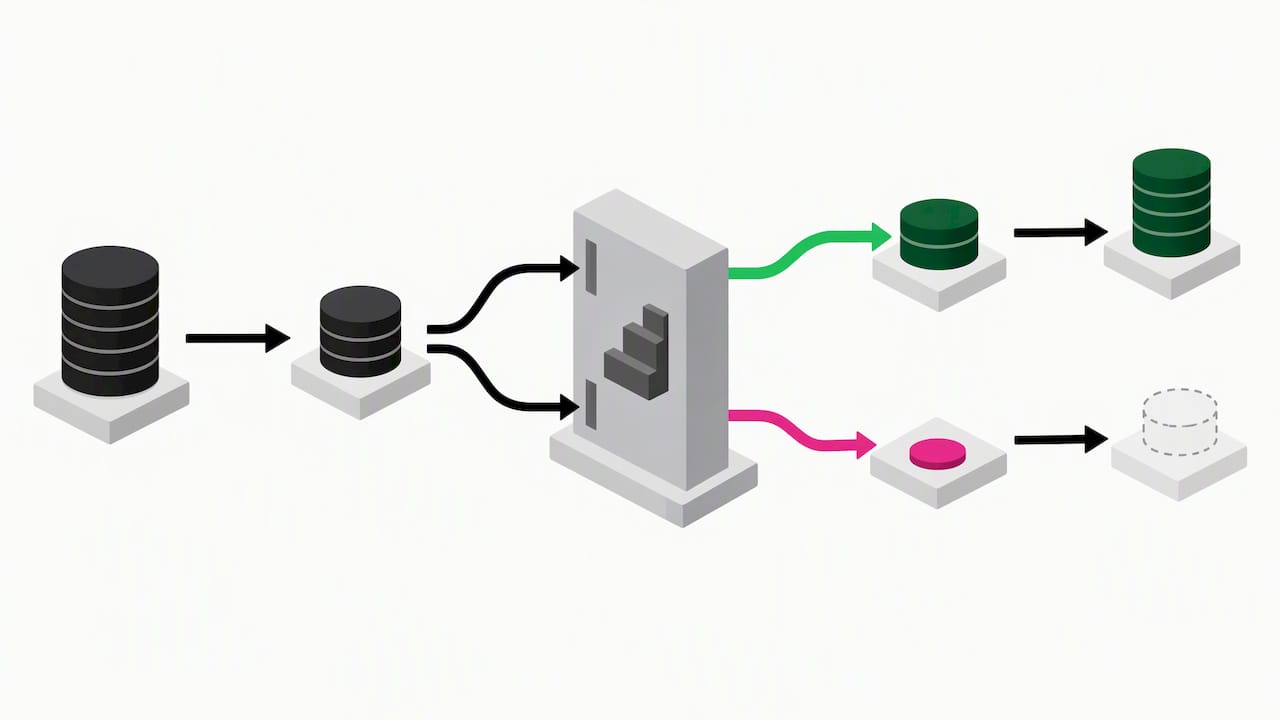
NormalizeDouble only adjusts how many decimal places a price displays; it does not check whether that price satisfies a broker’s minimum stop distance, tick size, or lot step. A normalized price can still be rejected outright.
Typical rejection reasons traders see in their logs include:
- Invalid stop: the requested stop-loss or take-profit sits closer to price than the broker’s minimum stop distance.
- Invalid price: the submitted price does not fall on a valid tick increment for that symbol.
- Freeze level: the order falls inside a zone where modification is temporarily blocked.
- Requote from spread movement: the quote moved between calculation and submission.
NormalizeDouble rounds for display only; it never validates against broker-side stop-level, tick, or freeze constraints. Treating it as a safety check is one of the most common root causes of rejected orders in copied trades.
How to normalize and translate prices and volumes safely when copying between brokers
A reliable copier recalculates every order at the moment of execution rather than relying on values cached at startup. The sequence below is the core logic any serious implementation needs.
- Query the follower’s live symbol properties, specifically SYMBOL_DIGITS, SYMBOL_POINT, SYMBOL_TRADE_TICK_SIZE, and the lot step (MODE_LOTSTEP), immediately before building the order.
- Map the master symbol to the correct follower symbol, combining automatic prefix or suffix detection with a manual override table for symbols that do not match cleanly, such as exotic pairs or CFDs.
- Scale the intended position size, then round to the follower’s lot step rather than truncating, and log any case where rounding materially changes the position instead of letting it drop silently to zero.
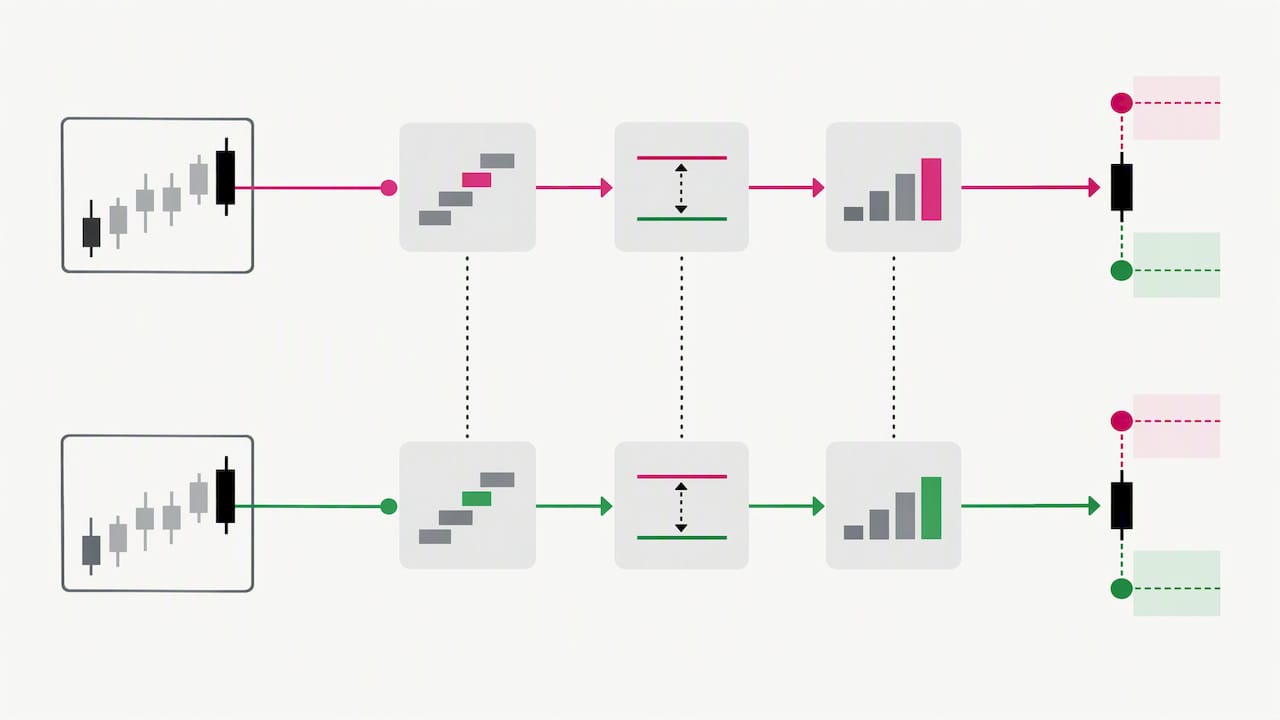
- Translate stop-loss and take-profit by measuring the economic distance from entry on the master side, then reapply that distance around the follower’s entry price or current quote, rounding outward so the result clears the minimum stop distance.
- Refresh the quote immediately before sending the order, and wrap the send in a bounded retry loop that checks the broker’s response code rather than assuming success.
Pro Tip: Build the symbol-property query and the order-send call as two separate steps so a stale quote never gets attached to a freshly recalculated price.
Relative, or offset-based, stop and take-profit translation generally survives broker differences better than copying absolute price levels, provided the logic correctly accounts for digits, tick size, and spread direction before rounding. Past results do not guarantee future performance, and none of this changes the underlying trade logic. It only affects whether the copied order executes at a valid, comparable price.
Testing checklist: demo scenarios that reveal precision and symbol-mapping bugs
Demo accounts across two or more brokers are the only reliable way to catch these problems before they affect live capital. Run these four scenarios before trusting any copier setup:
- Trade a standard symbol on the master, such as EURUSD, while the follower lists it as EURUSDm or EURUSD.raw, and confirm the mapping resolves correctly or logs a clear failure instead of doing nothing.
- Fund the follower account with a small balance so proportional sizing pushes toward the lot-step minimum, then verify whether the rounding policy floors to the minimum lot or drops the trade.
- Modify stop-loss and take-profit levels on the master while the follower broker enforces a wider minimum stop distance or a sudden spread widening, and confirm the rejection is logged rather than ignored.
- Disconnect the follower terminal with open positions, reconnect, and check that no duplicate orders appear and that partial fills reconcile against the correct master ticket.
Each of these tests targets a different failure mode. A copier that passes one and fails another will still cause real account problems later. Walking through a demo setup before going live is the single highest-value step in this entire process, and it costs nothing but time.
Recovery and logging best practices when translations or orders fail
When a translated stop or take-profit gets rejected, the copier needs a defined fallback rather than a silent drop. Three reasonable policies exist: retry with a slightly wider, still-valid distance, reject explicitly and alert the trader, or close the position under a predefined risk cap if no valid stop can be placed in time.
Logging should capture enough detail to diagnose any failure after the fact:
- The exact level requested, before and after rounding.
- The quote used at the time of the request, timestamped in UTC as recommended for audit-grade logs.
- The broker’s response code and any rejection message returned.
On reconnect, match open positions by master ticket number or magic number, skip anything already matched to avoid duplicate orders, and reconcile partial fills against the original requested volume rather than assuming full execution.
Feature checklist: what traders should require from a copier to handle precision mismatch
Before trusting any copier with live accounts, confirm it covers the following:
- Automatic symbol mapping with prefix and suffix detection, plus a manual override table for symbols that do not match cleanly.
- Live reads of digits, point, tick size, and stop or freeze levels at order time, not cached values from startup.
- Lot-step-aware sizing that clamps to a broker’s minimum and maximum lot rather than rounding silently to zero.
- Relative stop and take-profit translation with a configurable rounding and fallback policy.
- Detailed logs, demo-mode testing tools, and reconnect reconciliation that prevents duplicate orders.
Pro Tip: Ask any copier’s documentation directly how it handles a follower lot step larger than the calculated position size; the answer reveals whether rounding-to-zero is handled deliberately or by accident.
A practitioner’s short perspective and priority checklist
If there’s one lesson from watching these systems fail, it’s that testing on demo accounts across mismatched brokers catches more real problems than any amount of code review. Prefer relative stop and take-profit translation over absolute levels, keep rounding defaults conservative, and log every request, quote, and broker response. A copier without a documented reconnect policy is a copier you haven’t actually tested yet.
— Rimantas
Local Trade Copier: relevant features and how to trial it
We built Local Trade Copier around the exact problems covered above: live symbol-property reads, automatic prefix and suffix detection, and lot scaling that respects each follower’s own lot step rather than guessing. Running entirely on your own Windows machine or VPS, with local execution, keeps all trade data on one machine instead of routing through a cloud server, which is beneficial for prop firm accounts that restrict external IP addresses.

What this means in practice:
- Automatic symbol mapping handles broker suffix differences without manual configuration for most pairs.
- Configurable lot scaling and multiple risk options adjust position size per client account balance.
- A manual-like trade entry mode makes copied orders resemble a human-placed trade, which is useful for prop firm accounts that restrict EA trading.
- Cross-platform support covers both MT4 and MT5 components under one subscription.
As trade replication software, it copies your existing trades without adding any market logic, strategy layer, or outcome influence, so past results never guarantee future performance. If you want to see the mapping and sizing logic in action before committing, check the installation guide and try it with the 7-day free trial on our pricing page.
FAQ
What is a price precision mismatch in forex trade copying?
It is a difference in decimal places, tick size, or lot step between a master and follower broker for the same symbol. When a copier does not account for it, orders can round incorrectly, get rejected, or fail to copy at all.
How do I detect a precision mismatch programmatically?
Read the follower’s live symbol properties, specifically SYMBOL_DIGITS, SYMBOL_POINT, and SYMBOL_TRADE_TICK_SIZE, and compare them against the master’s values before sending an order. A mismatch in any of these three values signals that the price needs translation, not direct copying.
Why does NormalizeDouble not fix rounding errors?
NormalizeDouble only rounds a value for display; it does not check the result against a broker’s minimum stop distance, tick size, or lot step. A normalized price can still be rejected as invalid.
How does precision mismatch affect backtesting accuracy?
Historical data pulled from one broker’s feed carries that broker’s tick and digit structure, so applying it directly to another broker’s live execution rules can produce results that do not reflect real fills. Normalizing price data to a consistent format before comparing across sources reduces this gap, though it does not guarantee the live results will match.
What should I test before copying trades live between two brokers?
Run symbol-mapping, lot-rounding, stop-rejection, and reconnect-reconciliation tests on demo accounts across both brokers first. These four scenarios catch the vast majority of copying failures before they affect real capital.
Sources
- Trade Copier offset stop loss and take profit
- MQL5 Book: Symbols — point and tick
- MQL4 price normalization: Digits, Point, Stops | Pineify
Recommended
- Local Trade Copier DEMO on MT4 and MT5
- The use of Magic Numbers with the Local Trade Copier on MT4 platform
- How to Copy Trades Between Two or More MT5 Trading Accounts
- Local Trade Copier installation on MT4 and MT5
