
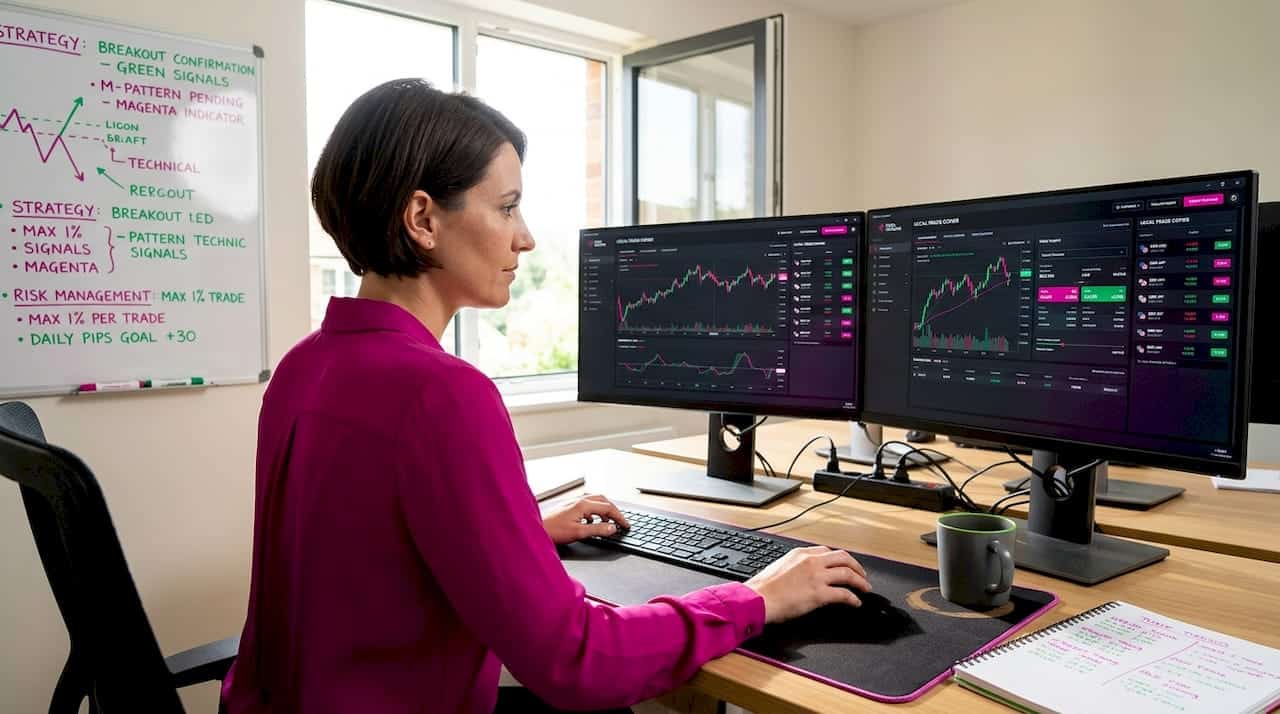
TL;DR:
Manual trade copying causes significant delays that can harm retail forex profits, especially during volatile markets. Proprietary trading solutions, designed for speed and precise control, outperform generic platforms by enabling 1-second-or-faster local execution, enhanced risk management, and multi-platform support. They foster disciplined, automated processes that improve reliability, security, and overall trading efficiency for account managers and professional traders.
Manual trade replication is one of the most persistent profit killers in retail forex. Every second you spend copying positions from one terminal to another is a second the market has already moved. Professional trading desks solved this problem years ago with purpose-built infrastructure, and the retail market has finally caught up. This guide breaks down why proprietary trading solutions outperform generic tools, how they deliver measurable advantages in speed and reliability, and what account managers and multi-account traders should prioritize when choosing the right setup.
Key Takeaways
| Point | Details |
|---|---|
| Superior speed and reliability | Proprietary solutions enable faster, more dependable trade replication than generic tools. |
| Advanced risk management | Built-in features help protect against errors and minimize account risks. |
| Multi-platform compatibility | Seamlessly copy trades across MetaTrader, DXTrade, and other supported platforms. |
| Automation ready | Easily implement algorithmic trading strategies and automated execution. |
| Scalable for growth | Proprietary tools support efficient scaling from one to many accounts without adding complexity. |
What makes proprietary trading solutions different?
Generic trading platforms are built to serve the widest possible audience. That sounds like a good thing until you need to copy a trade from MT4 to DXTrade in under half a second, or apply different lot sizes to six client accounts simultaneously. At that point, a one-size-fits-all tool starts showing its limits fast.
Proprietary trading solutions are designed from the ground up for specific, demanding use cases. They integrate directly with broker APIs, work inside the trading platform itself (rather than alongside it), and give you granular control over every execution parameter. As one key insight in the space confirms, prop firm trading advantages are heavily tied to specialized automation and tight integration with multiple brokerage systems. That is not something you get from a generic dashboard.
The people who use these tools fall into a few clear groups: retail traders running two or more personal accounts, independent account managers with a book of client accounts, prop firm traders who need on-machine execution to stay compliant, and EA developers replicating one licensed strategy across multiple funded accounts.
Here is how proprietary solutions stack up against generic alternatives:
| Feature | Proprietary solutions | Generic platforms |
|---|---|---|
| Execution speed | 1 second or faster under normal market conditions | 1 to 5+ seconds (cloud) |
| Lot size customization | Per-account rules (eight money management modes) | Fixed or limited presets |
| Cross-platform support | MT4, MT5, DXTrade natively | Usually single platform |
| Risk controls | Built-in equity guards, filters | Minimal or none |
| Cloud routing | No (local machine only) | Yes (IP exposure risk) |
| Support depth | Vendor-specific, expert level | Community forums only |
The advantages unique to proprietary systems include:
- Full automation without needing to stay at your desk
- Per-account customization of lot sizes, symbols, and filters
- Drawdown and equity guards that stop copying when accounts hit limits
- No external servers that can introduce latency or fail mid-session
- Dedicated vendor support from teams who understand your specific workflow
When you are managing prop firm accounts, the gap between proprietary and generic tools is not theoretical. It shows up directly in your daily P&L.
The core benefits: Speed, reliability, and security
Let’s talk about milliseconds. Most traders assume small execution delays are a nuisance, not a real risk. That assumption breaks down fast in fast-moving markets. A 2-second delay on a trade copy can mean the difference between entering at the right price and entering at a significantly worse one, especially during news events or high-volatility sessions. Over hundreds of trades, those small differences compound into a meaningful performance drag.
Trade copying across major platforms with proprietary infrastructure delivers a measurable edge here. Local execution eliminates the round-trip latency of cloud-based solutions. When your master account opens a trade, the copier running on the same machine sees that event almost instantly and replicates it before any network hop could occur.
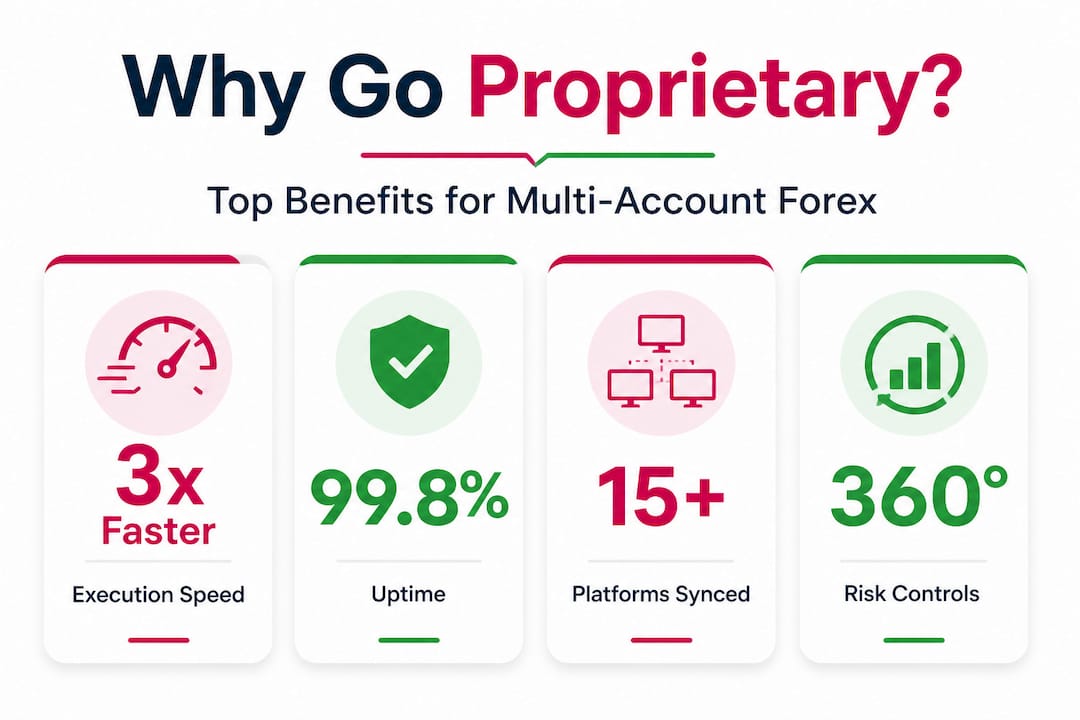
Infographic of top proprietary forex solution benefits
Infographic of top proprietary forex solution benefits
Here is a direct comparison:
| Solution type | Avg. copy latency | Failure risk | External server dependency |
|---|---|---|---|
| Local proprietary copier | 1 second or faster under normal market conditions | Very low | None |
| Cloud-based copier | 1 to 5 seconds | Moderate | High |
| Manual replication | 10 to 60+ seconds | Very high | None (human error instead) |
| Broker-provided tools | 2 to 10 seconds | Moderate | High |
Latency ranges for cloud-based copiers, broker tools, and manual replication are representative estimates based on general industry experience. Actual performance varies by broker infrastructure, network conditions, and platform version.
Security is the second major pillar. When you are copying trades to client accounts, a sync error or unauthorized access event is not just a technical problem. It is a trust problem. Reliable trade copier security is built into well-designed proprietary systems through features like error logging, automatic recovery after disconnection, and role-based controls that limit what each terminal can do.
Pro Tip: If you are running your copier on a VPS, make sure to use a strong, unique password for the VPS login and enable two-factor authentication where available. The copier’s security is only as strong as the machine it runs on.
Critical reliability features that professional setups include:
- Automatic reconnection after internet drops, without losing pending orders
- Full trade logs for auditing every copy event
- Instant notifications when errors or connection failures occur
- Redundant monitoring that checks master and client terminal states continuously
- Partial fill handling that keeps accounts synchronized even on incomplete executions
Each of these features matters individually, but together they form a system that you can trust to operate overnight or across time zones without constant oversight.
Multi-platform and algorithmic trading advantages
Modern traders rarely use a single platform. You might run your core strategy on MT4, manage a funded account on MT5, and have a prop firm account sitting on DXTrade. Without a proprietary solution built for cross-platform work, you are back to manual replication or running three separate tools that do not talk to each other.
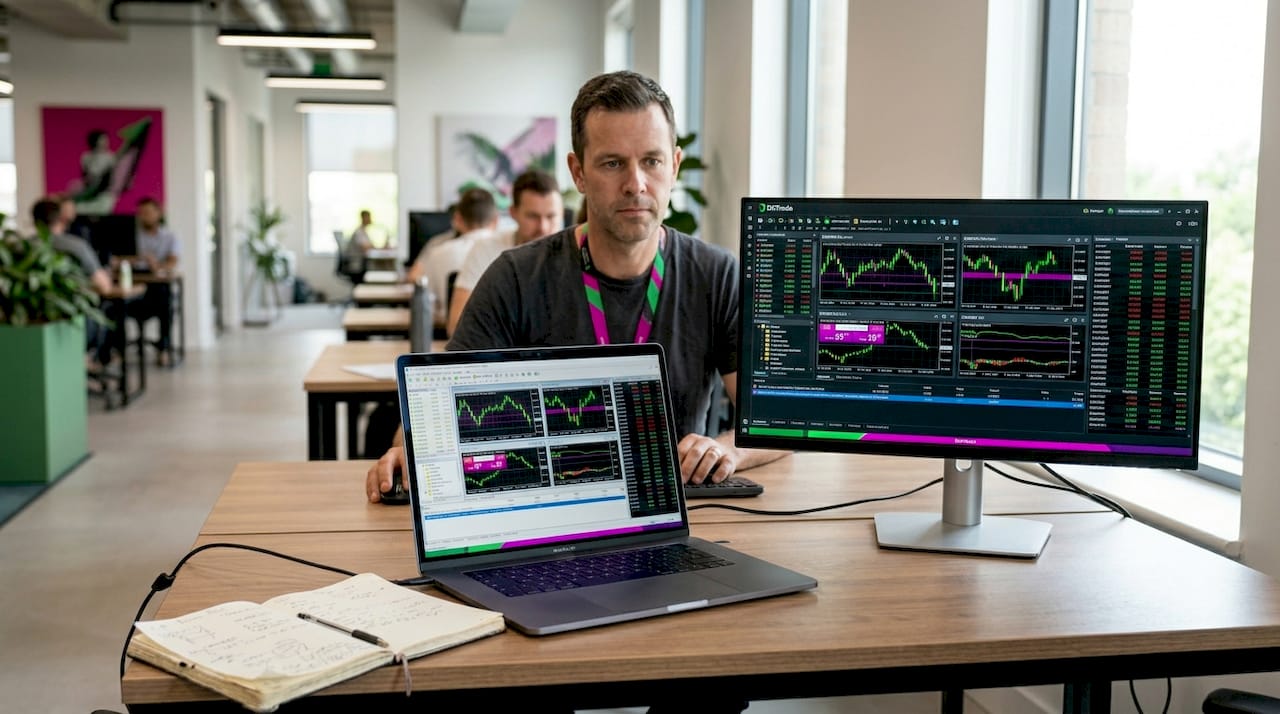
Trader using algorithmic forex platforms at shared desk
Trader using algorithmic forex platforms at shared desk
Syncing MetaTrader bots with DXTrade-based accounts is one of the clearest examples of where generic solutions fail completely. DXTrade uses a fundamentally different architecture than MetaTrader. Bridging them requires a tool explicitly built for that purpose, not a workaround or a third-party plugin.
Algorithmic trading in forex has grown significantly in retail markets, and automated execution is widely recognized as reducing manual entry errors and improving consistency across accounts. Proprietary solutions support this by acting as the execution layer underneath your strategy, so your EA fires once and the copier handles everything else.
Here is how a typical multi-platform sync works in a proprietary setup:
- Install the master component on the trading terminal running your strategy or EA.
- Install client components on each terminal you want to receive copies, including MT4, MT5, or DXTrade accounts.
- Configure lot sizing rules for each client account, using balance-based scaling or fixed lots depending on your preference.
- Set filters and symbol maps to handle any differences in instrument names between platforms.
- Run a test trade on the master and verify that all client accounts receive the correct copy within your target latency window.
- Monitor and log the first few live sessions before fully automating overnight execution.
The key insight here is that the steps above take minutes, not hours. Many proprietary solutions support seamless syncing from MetaTrader to DXTrade, which is critical for algorithmic and diversified strategies where your edge depends on consistent execution across every account simultaneously.
Pro Tip: When copying between MT4 and DXTrade, always verify symbol names match your configured mappings before going live. A mismatch will cause the copy to fail silently on the DXTrade side, and you will not notice until you check manually.
Trade replication, risk management, and scaling accounts
Here is where things get serious for anyone managing more than one account. Replicating a strategy is straightforward when you have two accounts and similar balances. It becomes genuinely complex at scale, with five or ten accounts across different brokers, different account sizes, and different drawdown limits.
The solution is not more manual oversight. It is smarter tooling. Proprietary trade copiers are built with risk mitigation best practices in mind, specifically for account managers handling multiple client accounts simultaneously. That means per-account equity limits, symbol-level filters, and automatic pause rules when a client account approaches its drawdown threshold.
The practical impact of these features is significant. Imagine you are managing four prop firm challenges with a 5% maximum drawdown each. Without automated controls, a bad run of trades could breach one challenge before you even notice. With per-account drawdown guards in your copier, that account simply stops receiving copies when the limit approaches, protecting the challenge without requiring you to manually intervene.
Tools that make scaling safe:
- Equity stop filters that halt copying when account equity drops below a set level
- Per-account lot size rules using balance-based scaling so larger accounts take proportionally larger positions
- Symbol whitelists and blacklists to prevent specific instruments from copying to certain accounts
- Time filters that restrict copying to specific trading sessions
- Partial lot support for accounts with smaller balances that cannot handle full-size positions
- Detailed per-account logs so you can audit performance independently for each client
When you start applying prop trading best practices at scale, these features shift from being convenient to being essential. An account manager running 10 client accounts without per-account risk controls is not managing risk. They are just hoping for consistent results.
Pro Tip: When scaling to more than three or four accounts, create a simple spreadsheet tracking each account’s current drawdown percentage and equity level. Review it daily. Automation handles execution, but you still need visibility into the overall health of your book.
The real-world edge: Why most pros won’t settle for generic solutions
Here is an uncomfortable observation that most articles in this space avoid. The real gap between traders who use proprietary tools and those who stick with generic solutions is not execution speed or platform support. It is operational discipline.
Generic tools create a ceiling. At some point they break, lag, or fail to handle edge cases your strategy generates. When that happens with a generic tool, you adapt by doing more manually. You add a workaround. You check more often. That works fine at small scale but it actively competes with what strategy automation insights tell us makes professional-grade trading operations efficient: removing human error from repetitive execution tasks.
Institutional traders figured this out decades ago. The reason professional desks do not use generic tools is not just because they can afford better ones. It is because they understand that each point of manual intervention is a point where discipline erodes. One missed copy becomes routine. One overlooked risk breach becomes an acceptable exception. Over time, the edge drifts away not from bad trades but from bad process.
What retail traders can take from that institutional mindset is simple: the tool you use shapes the habits you build. A proprietary copier that runs silently in the background, respects every rule you set, and logs every event creates accountability that no generic dashboard can match. You review logs. You refine rules. You build a process that gets tighter over time rather than looser.
The traders and account managers we see getting the most out of Local Trade Copier are not necessarily the ones with the best strategies. They are the ones who treat execution as seriously as signal generation. Speed matters. Reliability matters. But the compounding effect of a disciplined, automated, and auditable process matters most.
Ready to upgrade your trade replication?
If the advantages covered in this article match the problems you are trying to solve, the next step is straightforward.
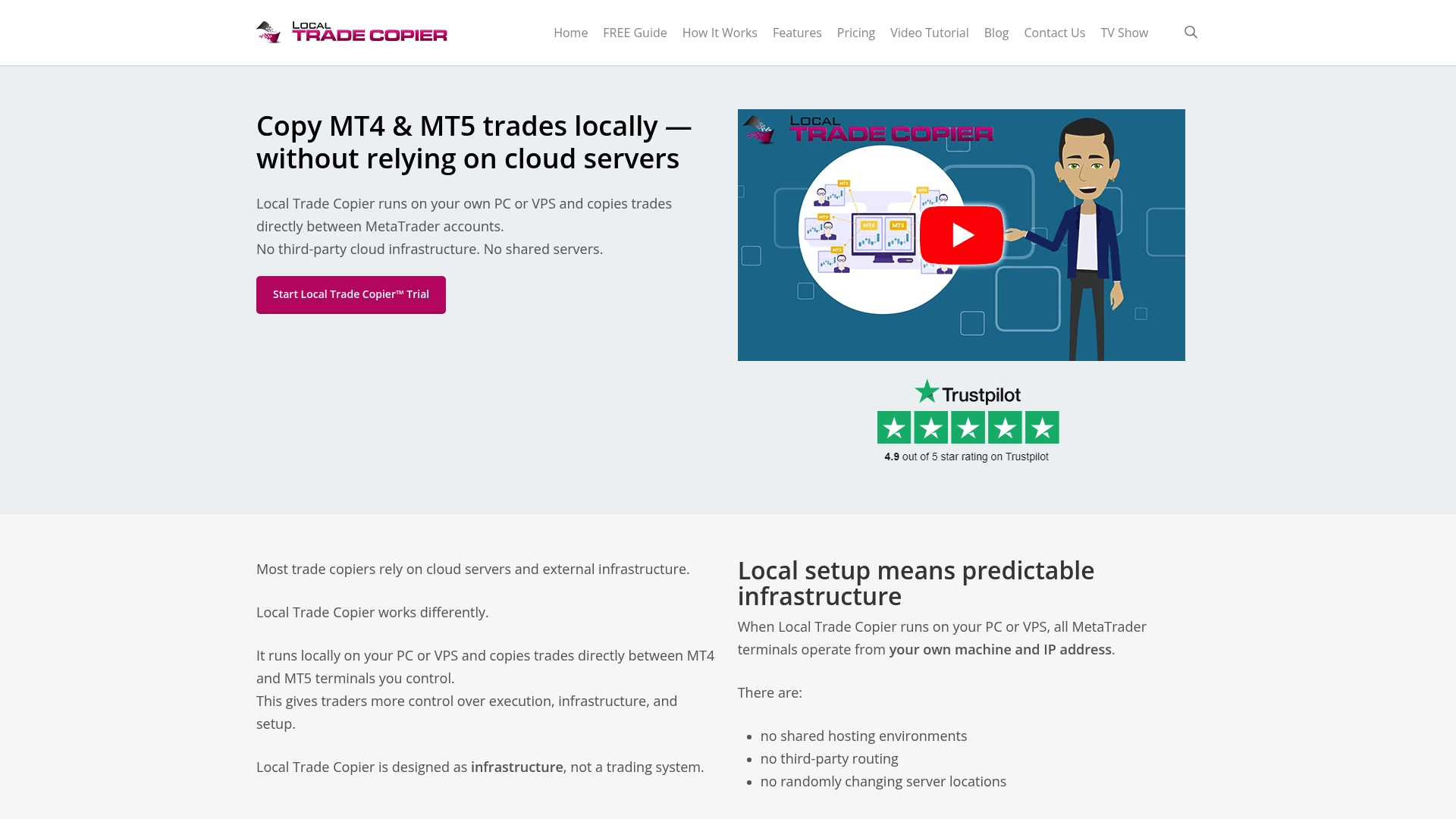
Local Trade Copier is a locally-installed trade copier for MT4, MT5, and DXTrade, with over 3,000 active users and a track record going back to 2010. It delivers fast trade copier performance with 1-second-or-faster local execution, eight money management modes, and no cloud routing risk. Whether you are managing client accounts or running multiple personal funded accounts, the setup process is covered with step-by-step easy copier installation guides. You can also explore a full cross-broker copying guide to understand exactly how replication works across different brokers and account types. A 7-day free trial is included with every subscription.
Frequently asked questions
How are proprietary trade copiers different from broker-provided tools?
Proprietary trade copiers offer deeper control over lot sizing, risk rules, and multi-platform execution compared to most broker-provided tools, which are typically limited to single accounts or platforms. Specialized automation and multi-broker integration are core features of proprietary systems, not add-ons.
Can I synchronize trades automatically between MetaTrader and DXTrade?
Yes. Local Trade Copier supports fast automated syncing between MetaTrader accounts and DXTrade accounts through DXTrade-compatible brokers. Note: FTMO DXTrade is not supported because FTMO has disabled the API for automated trading. DXTrade works with other brokers such as HeroFx and SwayMarkets.
Is using a proprietary trading solution secure for my client accounts?
Top proprietary solutions include built-in error handling, trade logs, automatic reconnection, and risk controls that protect client accounts from execution errors. Secure trade syncing with error protection is a standard feature in purpose-built copiers.
Do proprietary platforms support algorithmic or automated trading?
Yes. Proprietary copiers act as the execution layer beneath your EA or automated strategy, meaning your algorithm fires once and the copier handles all downstream replication. This is especially valuable for algorithmic strategies across platforms where consistent execution across every account is critical.
What kind of support is available for setting up trade copiers?
Established trade copier vendors provide detailed installation documentation, step-by-step setup guides, and direct customer support. Most professional-grade solutions are designed to get you running in under an hour, even if you are new to multi-account setups.
Risk Warning: Trading foreign exchange on margin carries a high level of risk and may not be suitable for all investors. Past performance is not indicative of future results. Trade copying software does not generate trading decisions and does not guarantee profitable outcomes. Only trade with capital you can afford to lose.
Recommended
- Prop trading best practices: Multi-account copying in 2026
- Copy Forex trades from one MT4 master into 3x MT4 clients
- What is forex account management: optimize multi-account trading
- Trade Multiple Accounts on MT4 and MT5 | Local Trade Copier
